
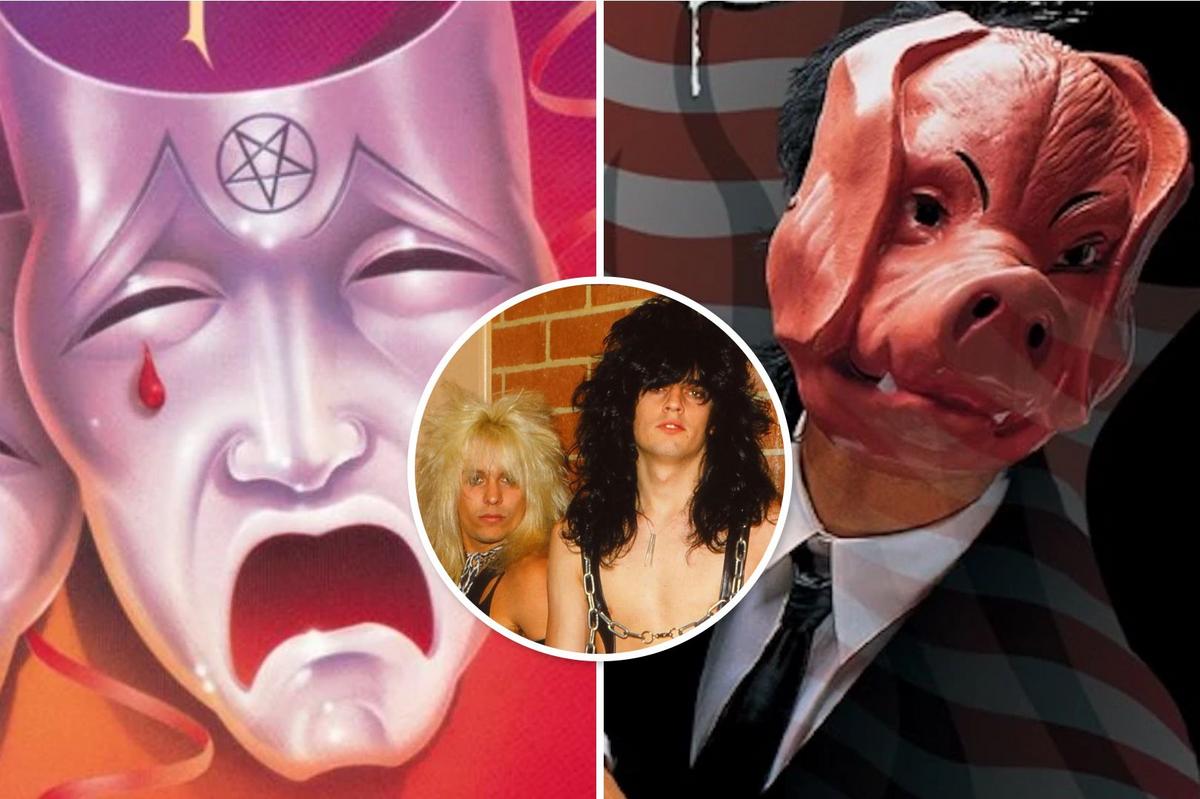
So, you fancy yourself a hardcore Mötley Crüe fan? Then check out our list of the 11 heaviest Mötley Crüe songs and tell us how we did. When Nikki Sixx, Tommy Lee, Vince Neil and Mick Mars debuted on Los Angeles’ Sunset Strip in 1981, there was no band quite like theirs. Mötley Crüe’s sleazy, decadent blend of heavy metal, glam rock, power-pop and punk made them an act to watch, and with the release of their scrappy 1981 debut album Too Fast for Love, they quickly set about reshaping the 80s hard rock scene in their image.
Mötley Crüe achieved their first of many breakthroughs and further kick-started the glam metal movement with 1983’s Shout at the Devil. Widely regarded as their best album, it also yielded several of their heaviest songs. The rest of the decade saw the band adopting a more polished pop-metal sound, but they didn’t fully abandon their roots. Even at their most radio-friendly, they managed to write a few throwbacks that recalled their nasty, dangerous origins.
The 90s were less kind to the band, as lineup changes and a shifting musical climate caused their popularity to dwindle. But even as their star waned, they variously churned out some of their best, heaviest and weirdest songs. So put your headphones on, crank the volume and get ready to revisit classic hits and deep cuts in our list of the 11 heaviest Mötley Crüe songs (in alphabetical order).
The Heaviest Tracks in the Mötley Crüe Catalog
“Bastard” (Shout at the Devil, 1983)
Mötley Crüe couldn’t have picked a better title for “Bastard.” This high-speed, riff-driven metal anthem sounds like the work of four sleazy street urchins fueled by nothing left to lose. Raw and unrepentant, it represents the best of the band’s musical instincts at the time.
“Dr. Feelgood” (Dr. Feelgood, 1989)
The band polished up their sound exponentially on Dr. Feelgood, shepherded by super-producer Bob Rock. But they still brought the heavy in spades, especially on the album’s massive title track, whose chugging power-chord riffs and gigantic grooves split the difference between vintage Aerosmith and future Metallica.
“Hammered” (Mötley Crüe, 1994)
Despite their best efforts to scrub it from their history, the 1994 self-titled album with lead singer John Corabi remains a cult favorite. Corabi’s bluesy rasp lent an inherent heaviness to every song on the record, perfectly pairing with the gnarly riffs and knuckle-dragging breakdowns on “Hammered.”
“Knock ‘Em Dead, Kid” (Shout at the Devil)
Nikki Sixx wrote this track after a violent encounter on the Sunset Strip. The lyrics seethe with fury and bloodlust, matched by tough-as-nails riffs and menacing gang vocals that capture the band’s early, volatile energy.
“Let Us Prey” (Generation Swine, 1997)
While Generation Swine is often viewed as a genre-hopping mess, there is no denying the raw power of “Let Us Prey.” It stands as a furious alt-metal stomper full of down-tuned riffs, blistering screams and honest-to-goodness breakdowns.
“Live Wire” (Too Fast for Love, 1981)
The song that launched the band’s career in earnest remains one of their heaviest. With its snarling riffs, high-octane drumming and primitive production, “Live Wire” epitomized the winning combination of punk, metal and rock ‘n’ roll.
“Red Hot” (Shout at the Devil)
Don’t let the glammy, fist-pumping hooks fool you. Tommy Lee’s monstrous performance on “Red Hot” provides the bedrock for Mick Mars’ smoldering riffs, allowing the track to go toe-to-toe with the thrash metal giants of the era.
“Shout at the Devil” (Shout at the Devil)
If heavy metal songs are like horror movies, then this title track is all about the psychological dread that precedes the jump scare. The lurching, lumbering instrumental is offset by Vince Neil’s raw, piercing vocals.
“Smoke the Sky” (Mötley Crüe)
When the band replaced Vince Neil with John Corabi, they shed their glam-metal trappings to become a bona fide heavy metal band. “Smoke the Sky” epitomizes that shift with its gnarled down-tuned riffs and a breakdown at 2:12 that stands as the single heaviest moment in the band’s catalog.
“Use It or Lose It” (Theatre of Pain, 1985)
While Theatre of Pain pivoted toward pop-metal, this track proved their metallic past was still alive. It features relentless double-bass drumming, urgent vocals, and a blazing guitar solo.
“Wild Side” (Girls, Girls, Girls, 1987)
Caught in the throes of addiction and dysfunction, the band’s depravity rings clear on “Wild Side.” Against choppy, percussive riffs and a martial stomp, Vince Neil exposes the seedy underbelly of the Los Angeles rock scene.