

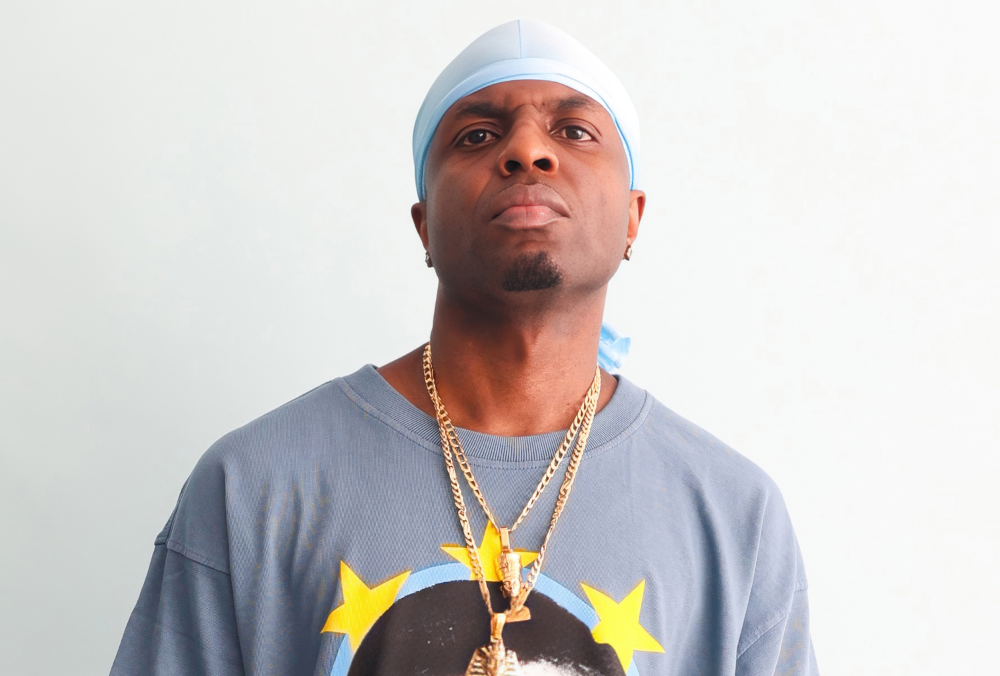
Some artists write to escape the environment they were raised in, using music as a diversion from their reality. For Harlem-born emcee Riviir, however, songwriting is a tool used to explain it. With the release of his three-song debut EP, Stay Down (Turn on You), Riviir proves that he does not view his upbringing and his sociopolitical consciousness as two separate lanes; instead, he treats them as one continuous, unfolding story. The project serves as a compelling introduction to an artist who uses Stay Down (Turn on You) to bridge the gap between local street narratives and international corruption.
When pressed on what drives him to weave his personal journey into broader, global themes—such as African political instability and the necessity of unity among Black nations—Riviir remains pointed and deliberate. “I mainly write music about my life experiences, historical events and the current state of the world and this EP is just a reflection of my thoughts and viewpoints,” he explains. “These three songs are part of a broader project in which I will get more in depth about worldly affairs and everyday struggles that most of us humans experience.”
The EP’s construction reflects this grounded approach. It opens with the voice of a young boy narrating the stark realities of ghetto life, setting the stage for Riviir’s own lyrical arrival. He navigates themes of loyalty, betrayal, greed, and systemic influence over a self-produced instrumental, which he famously rebuilt from scratch after a rights dispute over the original sample. This attention to detail continues on “Head Kisses,” where the focus narrows to the intimate, harrowing experience of a woman enduring abuse. By stripping the track down to just four instruments, Riviir ensures that the raw emotion of the narrative takes center stage.
The project’s scope reaches its zenith on the final track, “Tinubu (Slave of the West).” Here, Riviir calls out Nigeria’s president directly, utilizing the platform to highlight the corruption he views as the ultimate barrier to African progress. Drawing clear inspiration from legendary lyricists like 2Pac and Nas, Riviir avoids the trap of being merely another rapper—he positions himself as a social observer. What ties this debut together is not a singular genre or sound, but a consistent perspective: for Riviir, Harlem and the global stage are simply the same lens pointed in different directions. With only three songs to his name, Riviir has made it clear that this EP is merely the opening argument in a much larger conversation.