
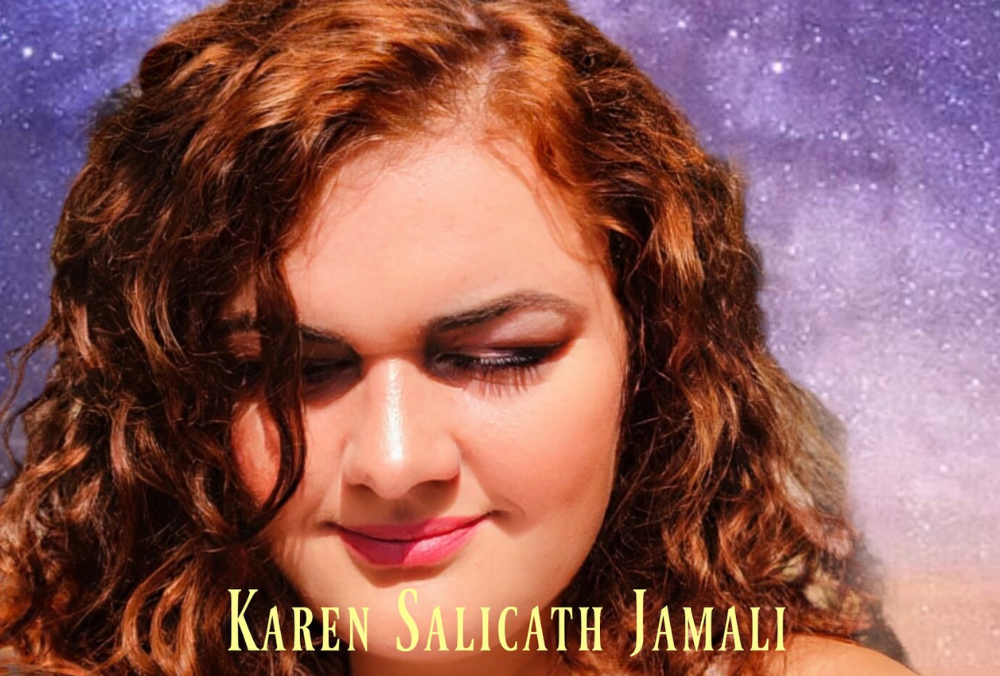
Karen Salicath Jamali has spent years building a reputation as one of contemporary classical music’s most quietly formidable voices — and now, she is expanding what that voice can literally do.
The composer and pianist released her debut vocal single, “Seeds of God,” on April 17, marking a deliberate shift from the layered piano compositions that earned her two European International Music Awards for Wings of Gabriel—Best Contemporary Classical Piano Composer and Best Contemporary Classical Piano Instrumental Solo.
The production is stripped to its foundation: guitar and voice. No orchestration, no additional sound layers. That choice, however, was not a stylistic experiment. It was a direct response to the weight of the material.
The song traces back to 2012, when Salicath survived a near-death experience that left her unable to tolerate light or sound for an entire year. Recovery stretched across three years. What followed that period was, by any measure, extraordinary — she found herself able to play piano and compose music, a transformation she has described as being reborn into music entirely.
During that experience, the imagery that would eventually become “Seeds of God” took shape. As she explained in a recent interview, she witnessed human consciousness as “a huge ocean of small dots, like caviar, lying side by side as one in the dark universe,” each one representing a human soul waiting to be sent to Earth, “to grow and be transformed into light.”
The song did not arrive through conventional writing. It came whole. “The song just came by itself as it is; I didn’t write it down,” she said. “Only after the recording was made did I write the text down.”
Returning to guitar — an instrument she has played since age eight, with over fifteen years of formal study — also carried its own significance. “I feel at home on the guitar,” she noted. “It has always been with me.”
Where her piano compositions operate in abstraction, Salicath draws a clear distinction for this record. “Songs are figurative art,” she said. “My piano compositions are abstract art.”
For a composer whose catalog has been built on textural complexity and instrumental depth, “Seeds of God” represents something rarer: the unguarded version.