

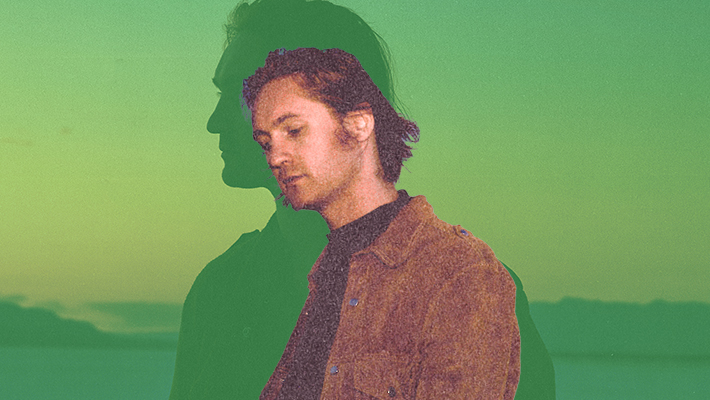
An interesting factoid about Miles Hewitt is that he studied poetry at Harvard. It is a detail that suggests a profound understanding of lyrical construction, yet it is one the 31-year-old singer-songwriter rarely leads with. When discussing his creative process, Hewitt emphasizes the technical precision of language—the way a single punctuation mark or a shift in perspective can fundamentally alter the emotional resonance of a line. For Hewitt, songwriting is an act of discovery, a way to find worlds within a single image.
The Philosophy Behind ‘Vainglory’
Hewitt’s latest album, Vainglory, arrives on July 24, serving as a thematic successor to his 2022 debut, Heartfall. While the title might sound like a personal statement, Hewitt clarifies that it is a critique of humanity’s misplaced confidence in its ability to control technology and the natural world. Drawing on the spirit of Ecclesiastes, the album explores the vanity of believing we possess rarefied power over the universe. It is also a reflection of the artist’s own torturous, rewarding process in crafting a record that feels truly glorious.
“It’s so Western colonial, so Enlightenment. It’s like Ecclesiastes — it’s vanity of vanities to believe that people have some kind of rare perspective, or rarefied power over the universe. That’s part of what the album title means to me,” Hewitt explained.
A Search for Truth in Modernity
Musically, Vainglory is a grand, immersive experience. Hewitt draws inspiration from prime-era English folk, channeling the spectral, haunted quality of artists like Nick Drake. His voice—a unique synthesis of Dan Bejar and Marianne Faithfull—floats over arrangements that reflect a deep, existential inquiry. The album is not merely a collection of songs but a cohesive cycle, a search for truth in an era defined by data, quantification, and the rapid reframing of what it means to be human.
Working with a roster of esteemed musicians from acts like Destroyer, Cass McCombs, and Andy Schauf, Hewitt allowed the songs to evolve through multiple iterations. He admits that the process was far more labor-intensive than his debut, but the result is an album that feels emotionally grounded and spiritually questing. By stepping back from the personal to adopt a broader, almost bird’s-eye view of the world, Hewitt has created a record that speaks to the collective anxiety of our time, asking whether we are merely data points or something far more profound.