
The 1970s was a decade defined by political unrest, social upheaval, and the lingering shadow of the Vietnam War. As the era progressed, the protest music that emerged moved away from the gentle folk sensibilities of the previous decade, evolving into something far more aggressive and confrontational. Artists began to challenge listeners, calling out political leaders, questioning religious institutions, and exposing the brutal realities of conflict.
The Evolution of Protest Music
While earlier protest music often lived in a world defined by folk music and acoustic rock, the ’70s transformed the art of protest into something that was much more aggressive and confrontational. From the doom-laden warnings of Black Sabbath to the apocalyptic broadcasts of The Clash and beyond, these tracks served as essential history lessons that demanded attention.
1. Crosby, Stills, Nash & Young, “Ohio” (1970)
In the spring of 1970, the National Guard shot and killed four students at Kent State University during a protest against the Vietnam War. The incident birthed one of the most prominent protest songs of the decade. Composed by Neil Young after seeing the infamous photo of the tragedy in Life Magazine, the song was a direct, scathing critique of the Nixon administration. Its inclusion of the line “Tin soldiers and Nixon coming” made it a lightning rod for controversy upon its release.
2. John Lennon, “Imagine” (1971)
John Lennon’s “Imagine” remains one of the most recognizable pieces of protest art. By presenting a vision of a world free from war, religion, and materialism, Lennon targeted the very systems that fuel global conflict. Despite its minimalist piano arrangement, the song faced significant backlash from critics who labeled it naive or hypocritical, questioning how a wealthy rock star could sing about a world without possessions.
3. Black Sabbath, “War Pigs” (1973)
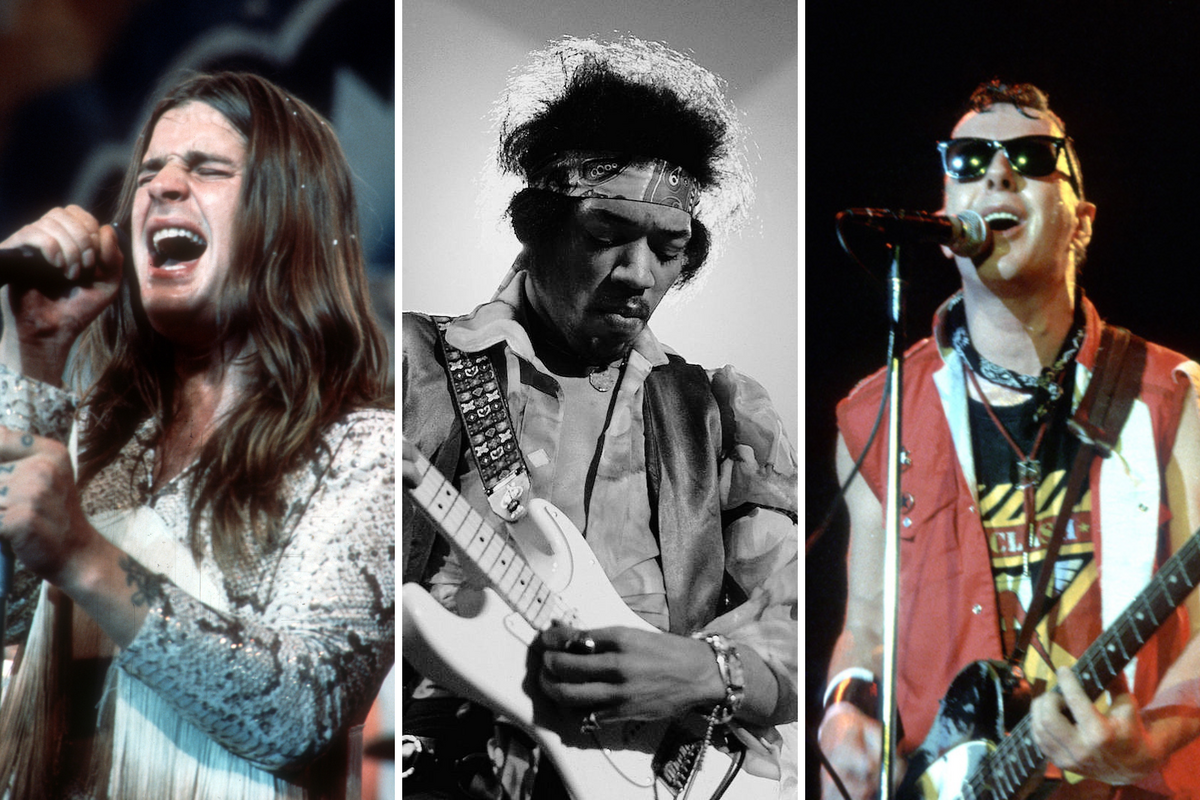
Black Sabbath’s “War Pigs” is a masterclass in heavy metal protest. While many listeners simply enjoy the track for its iconic riffs, it serves as a biting criticism of the Vietnam War. Originally titled “Walpurgis” and leaning into occult imagery, the band pivoted to a more overtly political message to ensure their anti-war stance was clear. As bassist Geezer Butler noted, they felt compelled to “tell it like it is” when other American bands were too frightened to speak out.
4. The Clash, “London Calling” (1979)
Written at the tail end of the decade, “London Calling” by The Clash captured the deep uncertainty and economic frustration gripping the United Kingdom. Joe Strummer and Mick Jones crafted the song as a checklist of disasters, reflecting the pervasive dread of the Cold War era. With its urgent cadence and genre-bending sound, the track remains a powerful testament to the distrust in leadership that defined the late ’70s.
5. Jimi Hendrix, “Machine Gun” (1970)
Released on the Band of Gypsys live album, “Machine Gun” is a sonic protest of the Vietnam War. Rather than relying solely on lyrics, Jimi Hendrix used his guitar to mimic the sounds of helicopters, explosions, and gunfire. By emphasizing the shared humanity of those forced to fight, Hendrix pointed the finger at the instigators of violence rather than the soldiers themselves, creating an emotional centerpiece that remains groundbreaking today.