
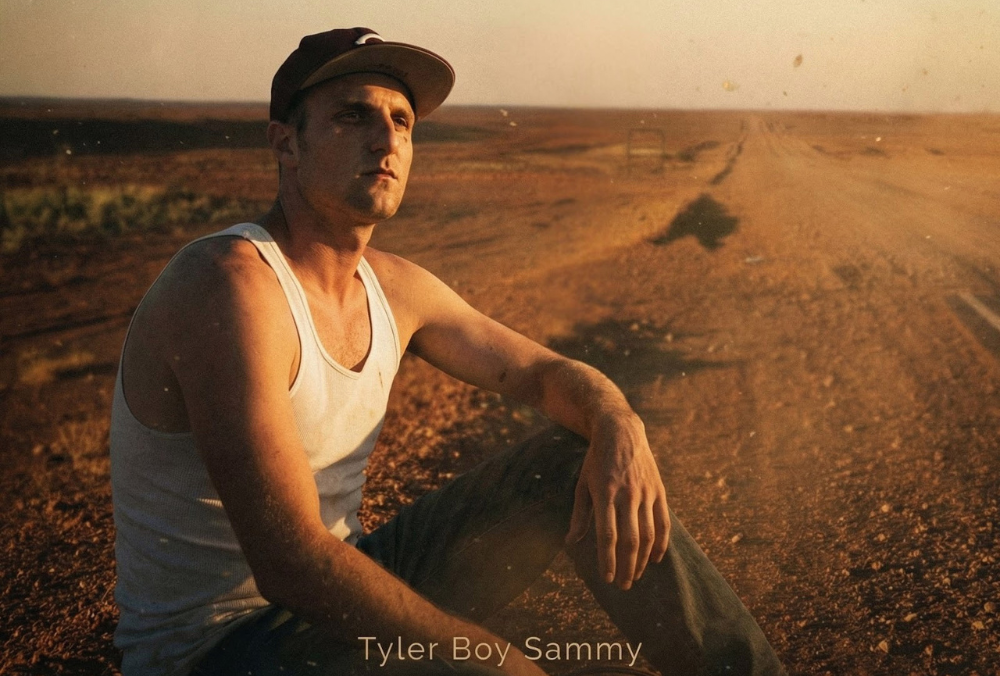
Tyler Boy Sammy ’s “Old Gravel Road” arrives with the kind of lived-in detail that can’t be manufactured in a studio. The track draws its strength from memory rather than spectacle, tracing a period of his life shaped by rural isolation, long stretches of uncertainty, and the quiet persistence that comes with growing up far from opportunity.
Rooted in the landscapes of Missouri farmland and East Texas upbringing, the song leans into country rap without treating it as a novelty blend. Instead, the sound feels natural to the environment that inspired it. The imagery of gravel roads isn’t just aesthetic—it frames a formative chapter, one that predates recognition and reflects a younger version of the artist navigating instability and movement between places.
What gives the track its weight is the perspective behind it. Tyler Boy Sammy’s delivery carries the tone of someone who has seen enough to recognize patterns, yet remains grounded in forward motion. The recollections of adolescence add a reflective layer that contrasts with the urgency often found in his earlier releases. Compared to tracks like “Usain Bolt” and “Italy,” which emphasize pace, ambition, and outward trajectory, “Old Gravel Road” slows things down and looks inward.
The recording process itself mirrors that instinct. Built organically over a country rap beat with a close collaborator, the track didn’t require overthinking. It unfolded in a way that suggests familiarity with the subject matter, allowing the performance to stay direct and unforced.
Lyrically, the song circles themes of endurance and personal history. Sammy’s openness about a difficult past adds context without overwhelming the narrative. Rather than framing his story through abstraction, he lets the details speak, giving listeners a clearer sense of where he’s been and how that informs where he’s headed.
“Old Gravel Road” ultimately functions as a snapshot of identity in progress. It doesn’t aim to resolve the past, but instead treats it as a foundation. In doing so, the track signals an artist increasingly comfortable with translating experience into storytelling, with a voice that feels anchored even as the next chapter unfolds.