
Emerging from the San Francisco Bay Area in the early 1980s as a more aggressive evolution of traditional heavy metal, thrash metal quickly became more than just a new sound and subgenre of metal; it became an outlet to voice frustration, distrust, and overall rebellion. Combining the speed of punk rock with the technicality and power of metal, intensity became the core root of the genre.
Bands used these characteristics to confront a variety of societal issues, from war to political corruption, propaganda, and greed. Whether it was Megadeth calling out political hypocrisy or Metallica exposing the true aftermath of war, thrash artists refused to play it safe.
1. Megadeth, “Peace Sells” (1986)
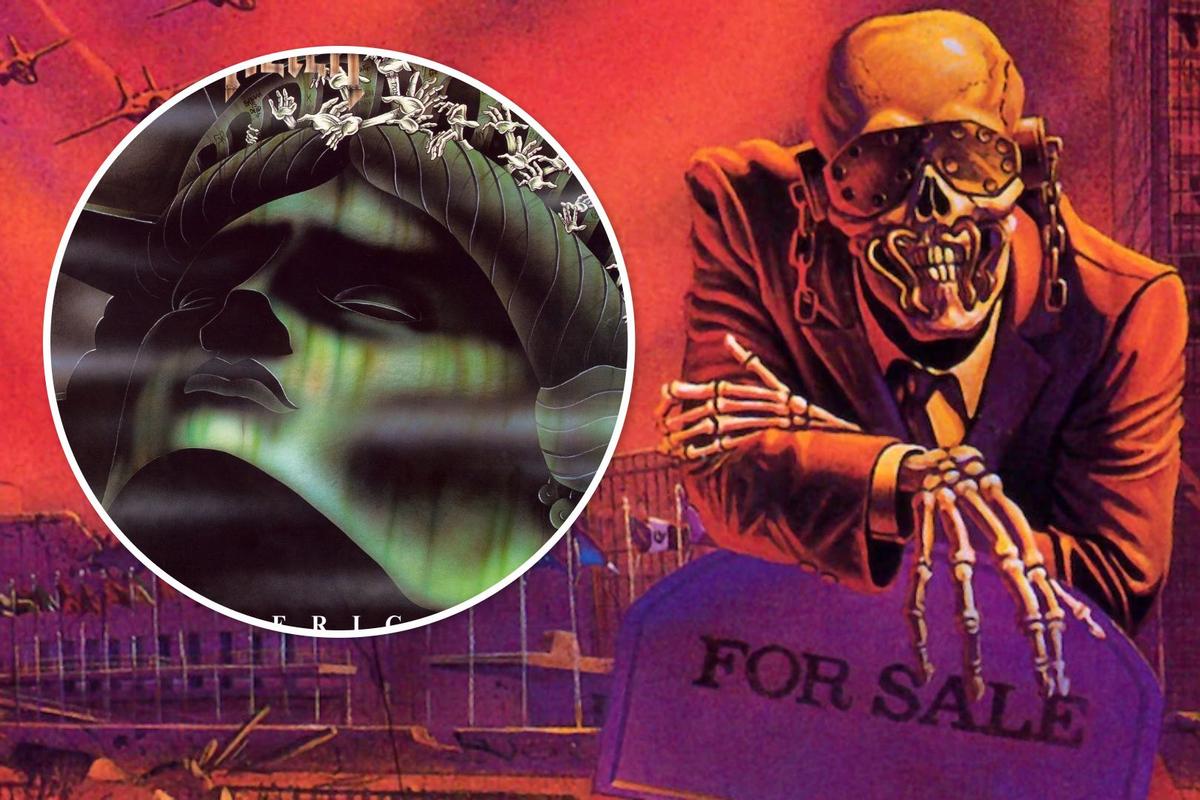
When Megadeth released Peace Sells…But Who’s Buying in 1986, the band was already ahead of the curve. Driven by an iconic bassline and Dave Mustaine’s cynical delivery, the song takes aim at media stereotypes. Mustaine noted that he wrote the track because he was tired of metal fans being portrayed as “dumbasses” on television.
2. Metallica, “One” (1988)
Metallica took a darker, more emotional approach with “One,” which explored the psychological cost of war. Inspired by the novel Johnny Got His Gun, the song forces listeners to confront the horrors that soldiers face long after the fighting ends. It remains a powerful anti-war statement that refuses to glorify combat.
3. Slayer, “War Ensemble” (1990)
If there is a track that captures the chaos of warfare, it is Slayer‘s “War Ensemble.” The song frames war as an endless cycle fueled by power and violence, condemning how easily society normalizes destruction.
4. Sacred Reich, “The American Way” (1990)
Sacred Reich delivered a sharp critique of American consumerism and political corruption with “The American Way.” The song questions whether the country’s priorities are built more around profit than people, a message that remains strikingly relevant decades later.
5. Nuclear Assault, “Critical Mass” (1989)
Nuclear Assault brought a punk-leaning edge to political thrash with “Critical Mass.” The song serves as an urgent warning about environmental decay and human greed, painting a bleak picture of a world on the brink of collapse.