
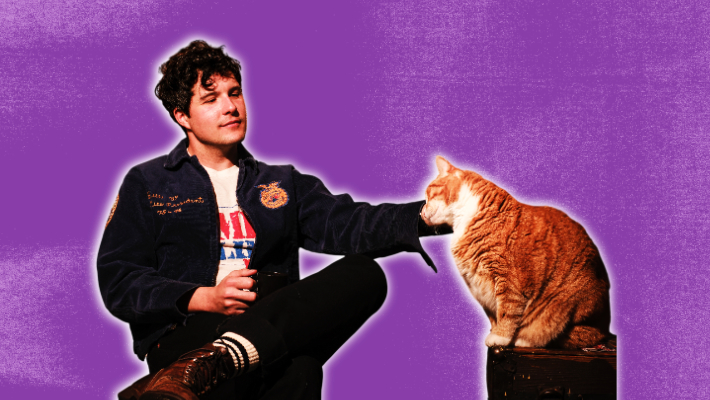
Growing up in the aughts, Brian Dunne was a kid out of time. Raised by a Vietnam veteran who filled their home with the sounds of CCR and The Animals, Dunne found himself surrounded by a working-class milieu 90 minutes north of New York City. While his peers were gravitating toward the indie sounds of The Strokes and The White Stripes, Dunne was busy studying the classic rock canon, specifically finding his creative genesis in Bruce Springsteen’s 1978 performance of “Rosalita.”
“I just was like, ‘My God, that’s it for me, man,’” Dunne, 36, recalled. “That was the genesis point of getting into music, and then I never looked back.”
Dunne’s path has been anything but straightforward. After more than a decade of honing his craft—including a stint on the indie label Kill Rock Stars—he has emerged as a staunch defender of earnest, heartland-inspired rock. Drawing from the legacies of Tom Petty, Billy Joel, and John Mellencamp, Dunne creates music that feels both shiny and accessible, refusing to hide behind the ironic distancing often found in modern indie circles.
The Evolution of Fantastic Cat
In 2021, Dunne’s career took a turn toward the collaborative when he formed the band Fantastic Cat alongside fellow singer-songwriters Anthony D’Amato, Don DiLego, and Mike Montali. The group was born out of a shared desire to move away from the self-seriousness that often defines the modern singer-songwriter genre. “We’re all singer-songwriters, and we’d all taken those press photos where you’re just looking super serious,” Dunne explained. “We were like, ‘We have to have more fun.’”
Fantastic Cat has since built a dedicated following through high-energy live shows that feature the members trading instruments and embracing a loose, pub-rock atmosphere. Their third album, Cat Out Of Hell, arrives on April 10, following the critical success of Dunne’s 2025 solo record, Clams Casino.
“I believe in New York City, I talk about it ad nauseum, but a lot of the music that comes out in New York are people posturing as New York bands. Why don’t people sing about regional New York? People in the South are not afraid to sing about their roots.”
Embracing the Heartland Sound
Dunne’s approach to songwriting remains refreshingly direct. He views his work as a continuation of the classic rock tradition, unbothered by the fact that his sound might have been considered mainstream radio fodder 40 years ago. He credits artists like The War On Drugs and Vampire Weekend for expanding the boundaries of what is “allowed” in indie rock, noting that their success has paved the way for others to explore sounds previously considered off-limits.
“I don’t think I personally would want to be in the mainstream,” Dunne said. “I don’t live a mainstream life, but I cannot deny that the beating pulse of my creative heart are those things. And I like the idea that that can be rarefied air.”
As he looks toward the future, both with Fantastic Cat and his solo endeavors, Dunne remains committed to his authentic, working-class perspective. He has found that the best way to handle the pressures of the industry is simply to keep creating. “If ever there is anything I am frustrated about, I just put it on my next record.”